
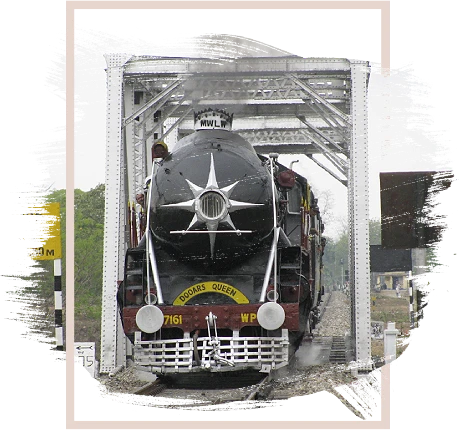
 India has the largest railway system under a single management in Asia, and the largest in the world, with 63000 route kilometers of track. Around 13,000 trains run daily, carrying on an average 1.3 crore passengers and 14 lakh metric tons of goods. Indian Railways started its journey in 1853. It is the single largest state owned and state operated system in Asia. It has contributed enormously in the making of modern India.
The first train ride was November 18, 1852, when company Directors journeyed from Bombay to Thane, covering the distance of 21 miles in 45 minutes. Formal inauguration was performed on April 16, 1853 with 400 guests in 14 carriages steaming off from Bori Bunder ‘amidst the loud applause of a vast multitude and to the salute of 21 guns.
Meanwhile, the East Indian Railways was in close pursuit. Its line was ready from Howrah to Pandooah (38 miles) by the end of 1853, three chance occurrences delayed its opening. By the time things were sorted out to everyone’s satisfaction 1854 had arrived and the first train was flagged off on August 15th that year.
The Madras Railway Company opened its first line from Veyasarpaudy to Walajh Road (Arcot), a distance of 63miles, on July 1st 1856. The first Railway line in North India, between Allahabad and Kanpur (119 miles), was opened on March 3, 1859, as was the Amritsar-Atari section towards Lahore in 1862. Such were the tiny strands which were later woven into a vast web running across the length and breadth of the Indian Sub-Continent.
The Mountain Railways of India refers to the following five railway lines built in the mountains of India during the British Raj:
A) Darjeeling Himalayan Railway (1881)
B) Kalka – Shimla Railway (1898)
C) Kangra Railway Valley (1926)
D) Nilgiri Mountain Railway (1908)
E) Matheran Hill Railway (1907)
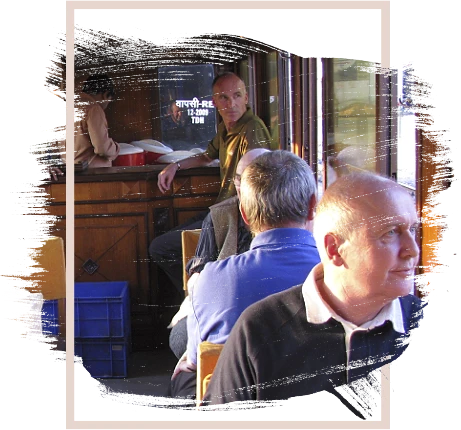 The first and still believed to be the best, the Darjeeling Himalayan Railways, when it was first introduced, was nothing short of an engineering marvel. It still is. During a time when technology was nowhere near what we have today, the railway engineers came up with the first hill passenger railways, a two-feet gauge railway line from Siliguri to Darjeeling in West Bengal, what we now know as the Darjeeling Himalayan Railways.
Looking at the hilly terrain and difficulties that the businesses in the area faced, Franklin Prestage, Agent of the Eastern Bengal Railway, in 1878, came up with the idea of a railway link between the two places that will not only help transport essential commodities but will also do that at a much lesser cost. Now the train runs from New Jalpaiguri to Darjeeling, and is a very popular tourist attraction in Darjeeling.
The UNESCO World Heritage Committee inscribed Darjeeling Himalayan Railways as a world heritage site on December 5, 1999, for its innovative nature and for making an important contribution towards the social and economic development of a region.
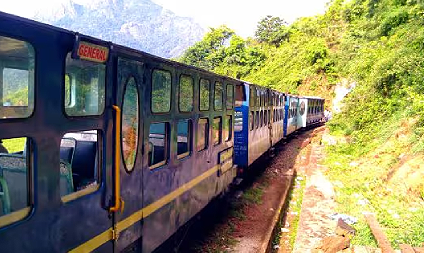
Next up is the Nilgiri Mountain Railways. The construction of this metre-gauge single-track railway in Tamil Nadu started in 1891 and was finished in 1908. Ever since then, this toy-train has been making rounds of the gorgeous landscapes of Mettupalayam to Ooty. The Nilgiri Mountain Railways was exclusively used by the Britishers, who loved to head out to the beautiful hill stations to escape summer’s heat.
If you love train travel in the southern flank of India, for a good part, you have the Nilgiri Mountain Railways to thank for. It still has that old world charm to it. Add to that the unmatched beauty of the Western Ghats that go along the rail route, and you have a very beautiful vacation in your hand.
Small tips for your travels onboard the Nilgiri Mountain Railways: the right-hand side seats will give you outstanding views of the Western Ghats; the Mettupalayam to Coonoor route is the most scenic; and the monsoon train ride is one of the most beautiful rides.
The Nilgiri Mountain Railways became a UNESCO World Heritage Site in 2005.
the 96 km long Kalka-Shimla Railway, built in 1903, connected Shimla with the northern plains. The toy-train, as it was also called, was the best way to get to Shimla, the then summer capital of British India. It became a part of the UNESCO World Heritage Site in 2008.
Travelling onboard the Kalka-Shimla Railway is an experience you will want to write home about. The beautiful scenery is a known fact, with Barog to Shimla as the most beautiful stretch, but did you also know that this railway is full of little curvy surprises? Yes, the Kalka-Shimla line goes through a total of 20 train stations; 102 tunnels that are still in use, though it started with 107 tunnels, 864 bridges, and 919 curves.
These three, together, make up some of the most incredible travel experiences in India.
 Darjeeling Himalayan Railways
West Bengal
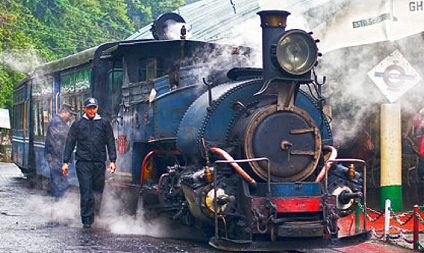
The Darjeeling Himalayan Railway is one of India's most famous toy trains. Trains have been running on this historic route since 1881, and it is recognized as a UNESCO World Heritage Site. Passing through tea gardens, mountain villages, markets, and winding curves, the train arrives in Darjeeling. A major highlight of this route is the Batasia Loop, offering stunning views of Mount Kanchenjunga on clear days. The steam-engine joyride from Darjeeling to Ghum is immensely popular among tourists. Steam hauled chartered train booking facilities ex Siliguri Junction to Darjeeling. Steam hauled Dinning chartered train also major attractions for the tourists . Ample opportunity for photographers because Railway Tracks and Roads are together. Special Freight charters are also available for Non Commercial/ Commercial purposes. View Gallery [+]
 Kalka-Shimla Railway
Himachal Pradesh
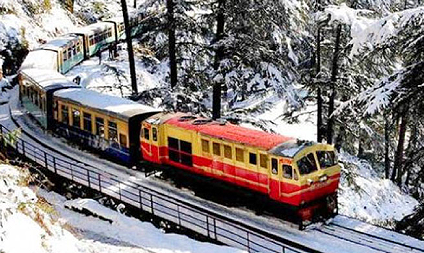
Spanning approximately 96 kilometers, the Kalka–Shimla Railway is one of India's most scenic mountain railways. It is also a UNESCO-recognized historic railway. The route features numerous tunnels, bridges, pine forests, valleys, and stations dating back to the British era. As the train slowly ascends the mountains towards Shimla, the experience feels like traveling through a vintage postcard.
 Nilgiri Mountain Railways
Tamil Nadu
Running from Mettupalayam to Ooty, the Nilgiri Mountain Railway offers one of the most picturesque train journeys in India. To navigate the steep mountain terrain, the train employs a special rack-and-pinion system. With its dense forests, tea gardens, waterfalls, mist-covered hills, and blue-and-cream-colored trains, this journey offers a memorable experience for tourists. Scenes from this railway route have also been featured in numerous Bollywood films.
 Kangra Valley Railway
Himachal Pradesh
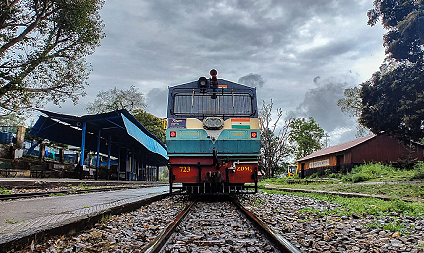
The Kangra Valley Railway may not be as globally renowned as the Darjeeling or Kalka-Shimla lines, but it is certainly not inferior in terms of natural beauty. The route from Pathankot to Joginder Nagar offers views of lush green valleys, terraced fields, rivers, quaint villages, and distant snow-capped Himalayan peaks. It is a magnificent route for photography enthusiasts and nature lovers alike. View Gallery [+]
 Matheran Hill Railway
Maharashtra
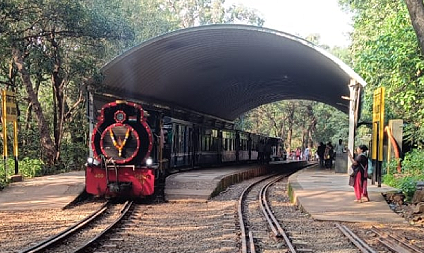
Running from Neral to Matheran in Maharashtra, this toy train ride is ideal for travelers who appreciate a peaceful atmosphere. Matheran is one of the few vehicle-free hill stations in India. The train winds its way through dense forests, mountain bends, and scenic valleys. Far from the city's hustle and bustle, this leisurely journey amidst nature offers a truly unique experience. View Gallery [+]
